 TR
All-on-6 implant treatment is a full-arch tooth replacement approach that uses six implants to support a fixed restoration. This page explains indications, planning, gum and bone considerations, and what patients should expect from evaluation and treatment.
All-on-6 implant treatment is a full-arch rehabilitation approach used when many teeth are missing, severely damaged, or no longer predictable to maintain. In this concept, six implants are placed in the jaw to support a fixed full-arch prosthetic restoration. The goal is not only to replace teeth, but to rebuild function, support oral health, and create a stable foundation for long-term chewing comfort and appearance.
For many patients, the decision is not only about missing teeth. It is also about repeated dental problems, advanced gum disease, failing restorations, discomfort with removable dentures, or uncertainty about whether existing teeth and implants can still be preserved. In these situations, careful diagnosis matters. A responsible treatment plan should start with biology: gum condition, bone support, inflammation control, bite analysis, and overall oral stability.
At Dr. Kenan Nazaroğlu’s clinic, treatment planning is approached with a health-first perspective. That means evaluating periodontal condition, implant feasibility, aesthetic needs, and functional requirements together rather than reducing full-arch treatment to a standard package. In appropriate cases, All-on-6 implant treatment may be considered as part of a personalized plan supported by digital dentistry principles.
What is All-on-6 implant treatment?

All-on-6 implant treatment is a method of replacing a full dental arch using six implants as support for a fixed prosthetic restoration. It is generally considered when a patient has extensive tooth loss, multiple hopeless teeth, or a full arch with poor long-term prognosis.
The exact treatment design depends on the individual clinical situation. The number, position, and angulation of implants are determined according to bone availability, anatomical limitations, bite forces, gum condition, and restorative goals. Because of this, not every patient with missing teeth is automatically a candidate for the same full-arch plan.
Compared with removable dentures, a fixed implant-supported full-arch restoration may offer improved stability and confidence in daily function. However, suitability depends on proper examination and realistic planning. Existing infection, uncontrolled gum disease, or unresolved implant complications should not be ignored simply to move quickly toward a fixed solution.
Who may be suitable for full-arch replacement with All-on-6?
All-on-6 implant treatment may be evaluated for adults who have:
- Complete tooth loss in one arch
- Multiple failing teeth with poor long-term prognosis
- Advanced breakdown related to gum disease
- Extensive restorative problems that make conventional repair less predictable
- Difficulty using removable dentures
- A need for a fixed full-arch solution after comprehensive examination
Suitability is not decided by the number of missing teeth alone. The quality of the gum tissues, the amount and shape of available bone, oral hygiene capacity, bite pattern, medical history, and patient expectations all affect planning.
Why gum health matters before implant treatment
Many full-arch cases involve a history of periodontal problems. If active inflammation is present, it should be identified and managed as part of the treatment process. Healthy surrounding tissues are essential for both natural teeth and implants. When gum disease is overlooked, the long-term stability of treatment may be compromised.
For this reason, periodontal evaluation is often a critical step before implant decisions are finalized. Patients who have bleeding gums, recession, loose teeth, or a history of periodontal treatment may benefit from understanding the underlying condition first. You can read more about this in Gum Disease Treatment: Diagnosis, Stages, and Periodontal Care Options.
How All-on-6 treatment is planned
Successful full-arch implant treatment begins with detailed planning rather than a one-size-fits-all template. The purpose of planning is to determine whether the case is biologically and mechanically suitable, and if so, how to position the implants in a way that supports both function and long-term maintenance.
Clinical and radiographic evaluation
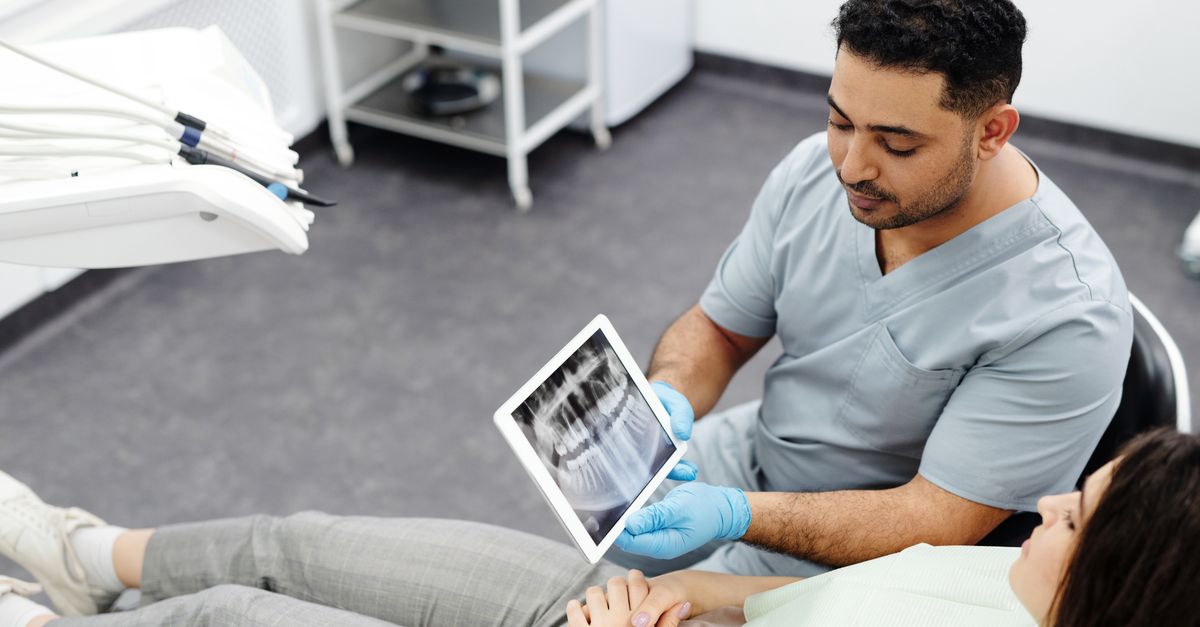
The first stage usually includes a detailed oral examination and imaging review. The clinician assesses the remaining teeth, gum condition, bone support, bite relationship, smile line, and any signs of infection or structural risk. If there are failing teeth, the question is not only whether they can be removed, but whether the tissues can support the next stage of treatment safely.
Digital planning and prosthetic vision
In modern implant care, digital planning can help connect surgical decisions with the final restorative goal. Instead of placing implants first and solving the prosthetic challenges later, the restoration is considered from the beginning. This supports more controlled implant positioning and a treatment design that respects both function and appearance.
Digital workflows may also help visualize spacing, angulation, and restorative contours before surgery. For patients who want to understand how technology supports planning, see Digital Dentistry in Modern Dental Treatment Planning and Care.
Surgical guide considerations
When appropriate, implant surgery may be supported by a surgical guide to transfer the digital plan more precisely to the clinical setting. This can be especially valuable in full-arch cases where implant position influences prosthetic fit, hygiene access, and load distribution. You can explore this topic further in Surgical Guide Implant Surgery: Precise Digital Planning for Implant Placement.
What happens if there are failing teeth or existing problems?

Some patients considering All-on-6 treatment still have teeth in place, but those teeth may no longer be maintainable because of severe decay, structural damage, mobility, or periodontal destruction. In such situations, treatment may involve staged decision-making. Teeth that cannot be predictably preserved may need to be removed as part of the overall rehabilitation plan.
In selected cases, tooth extraction and temporary prosthesis application may become part of the treatment sequence. The exact timing depends on tissue condition, primary stability, infection control, and the broader restorative plan. These decisions should be made only after careful examination, not assumed in advance for every patient.
What if the patient already has implants?
Full-arch rehabilitation is not always a first-time implant case. Some patients seek a second opinion because previous implants have developed complications such as inflammation, bone loss, esthetic problems, or prosthetic instability. In these cases, the first step is not automatically placing more implants. The cause of the complication must be understood first.
When prior implant treatment has failed or become biologically unstable, treatment planning may require management of implant complications before a new full-arch solution is considered. This is especially important in patients with peri-implant inflammation or tissue loss in visible areas.
Function, aesthetics, and realistic expectations
All-on-6 implant treatment is often discussed in terms of convenience and fixed teeth, but function and tissue health should remain central. A full-arch restoration should allow for effective hygiene access, balanced bite forces, and stable tissue support. Aesthetic goals are important, especially in the smile zone, but they should be built on a biologically sound foundation.
Patients often ask whether the final result will look natural. The answer depends on several factors: lip support, smile line, facial proportions, gum display, jaw relationship, and the condition of the supporting tissues. A natural-looking outcome is not created by tooth color or shape alone. It comes from integrated planning.
In cases where smile harmony is an important concern, restorative planning may overlap conceptually with smile design principles. If you would like to understand how facial balance and dental proportions are evaluated, see Smile Design Treatment: Planning a Balanced and Natural-Looking Smile.
Immediate treatment questions in full-arch cases
Some patients ask whether implants and a temporary restoration can be placed in a shorter timeframe. While immediate approaches may be possible in selected situations, they are not suitable for every case. Bone condition, infection status, implant stability, extraction site characteristics, and bite risk all influence whether an immediate protocol is appropriate.
Immediate treatment decisions should be based on clinical criteria, not on convenience alone. If you want to learn more about this concept, read Immediate Implant Treatment: Who May Be Suitable and How the Process Works.
Why individualized evaluation is essential

Although the term All-on-6 sounds standardized, real cases are not. One patient may have advanced gum disease and multiple mobile teeth. Another may have old implants with esthetic complications. A third may have severe wear, bone loss, or a removable denture that no longer functions well. These situations may all lead to discussion of full-arch treatment, but they do not require identical plans.
A careful evaluation helps answer key questions:
- Can any existing teeth be maintained safely?
- Is there active periodontal or peri-implant inflammation?
- Is the available bone sufficient for the planned implant positions?
- Would a surgical guide improve execution of the plan?
- Is a temporary prosthetic phase needed?
- How should function, hygiene, and aesthetics be balanced?
These are the questions that support responsible treatment planning. They also help patients understand that long-term success is linked to diagnosis, tissue health, and maintenance—not simply to the number of implants used.
When to seek a professional consultation
If you are missing most or all teeth in one arch, have multiple failing teeth, struggle with a removable denture, or have concerns about previous implant treatment, a detailed consultation can help clarify your options. The purpose of the consultation is to assess your current oral condition, identify biological risks, and determine whether full-arch implant treatment may be appropriate in your case.
For patients with a history of gum disease, gum recession, implant inflammation, or esthetic concerns in the front region, this evaluation is especially important. A scientific and individualized approach can help distinguish between what is technically possible and what is biologically sound.
All-on-6 implant treatment can be an effective solution in properly selected cases, but it should always begin with careful diagnosis, clear planning, and a health-first perspective.
Frequently asked questions
Is All-on-6 implant treatment the same for every patient?
No. The concept refers to a full-arch restoration supported by six implants, but the actual treatment plan varies according to bone anatomy, gum condition, bite, aesthetic needs, and the condition of any remaining teeth or existing implants.
Can patients with gum disease still be considered for All-on-6?
They may be considered, but active periodontal disease must be properly evaluated and addressed as part of treatment planning. Healthy tissues are an important part of implant stability and long-term maintenance.
Does full-arch treatment always include immediate teeth on the same day?
Not always. In some cases, a temporary prosthesis may be possible, but this depends on clinical findings such as implant stability, infection control, and the overall treatment design. It should be decided individually.
What if I already have implants with problems?
Existing implant complications should be examined carefully before planning a new full-arch restoration. Inflammation, bone loss, soft tissue issues, or prosthetic problems may affect the next treatment steps.
Is aesthetics part of All-on-6 planning?
Yes, but aesthetics should be planned together with function and tissue health. A natural-looking result depends on facial proportions, smile line, prosthetic design, and the condition of the supporting tissues.